

![Blaine's Charmeleon [1st Edition] #31 Pokémon card](https://storage.googleapis.com/images.pricecharting.com/880d782af3aa2d8e7f86d4864f8cf882adf69fa0142682689e6eb352b5391dfd/1600.jpg)
![Charmeleon [Shadowless] #24 Pokémon card](https://storage.googleapis.com/images.pricecharting.com/325d573e1c7d3188266399ec4c6ca4c95c2a829dfd2c174ae510156f8c30fc0d/1600.jpg)
The important difference in this Charmeleon comparison is the gap between modeled expected profit and the PSA 10 outcome. The original article treated the larger PSA 10 figure as profit from a typical graded copy. That interpretation was wrong. These figures are a historical snapshot, not verified cards available to buy at those prices.
What the Shadowless figures actually mean
The snapshot lists Shadowless Charmeleon at $5.46 raw and $440.86 in PSA 10, with $25 grading. Subtracting raw and grading costs from the PSA 10 reference gives $410.40. That is conditional on receiving PSA 10 and selling at the reference price, before selling fees and other expenses.
The snapshot's modeled expected net profit is $59.23. This smaller figure weights the available grade outcomes using historical population shares. It already subtracts raw and grading costs. Subtracting them again would double-count those costs.
The historical PSA 10 share is 11.9%. It does not mean a randomly purchased raw copy has an 11.9% chance of receiving that grade. The condition of the specific copy and the selection of cards submitted for grading matter. An unusually large spread between raw and graded references is also a reason to verify the exact edition, condition, and recent comparable sales.
Compare outcomes across printings
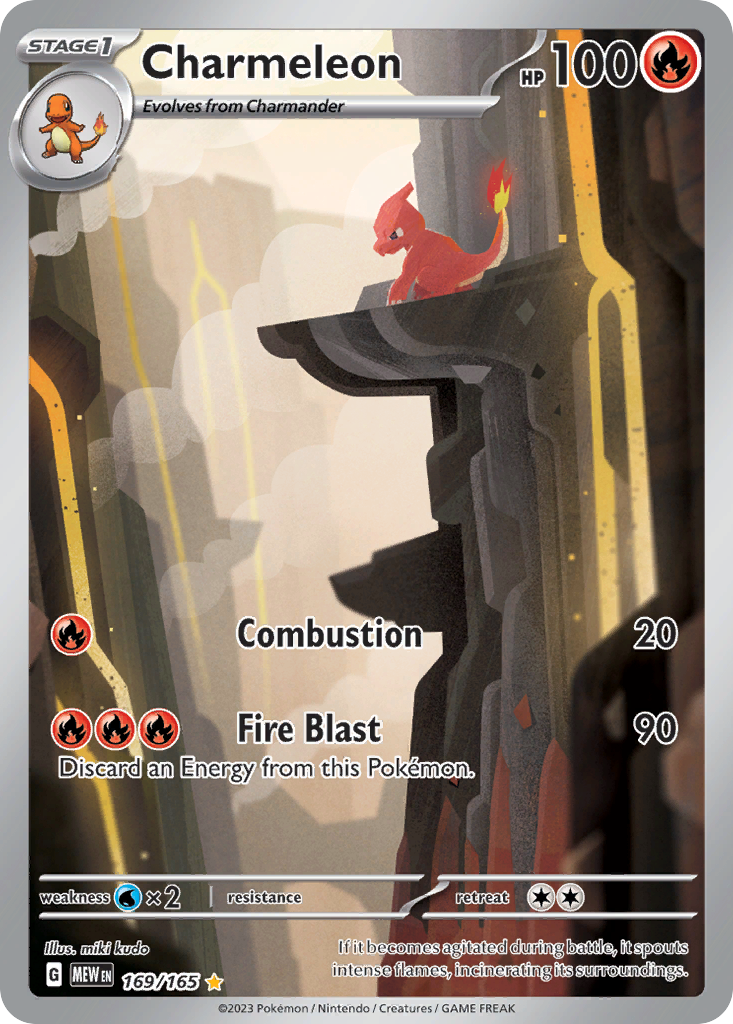
Scarlet & Violet 151 Charmeleon has a $57.77 raw reference, a $477.89 PSA 10 reference, and a 26.0% historical PSA 10 share in the snapshot. Its modeled expected net profit is $103.41, while the conditional PSA 10 profit is $395.12 before selling fees. Its expected-profit figure exceeds Shadowless in this snapshot even though its conditional PSA 10 ROI is lower.
Japanese Promo Charmeleon shows $216.58 modeled expected net profit and $456.63 conditional PSA 10 profit. The evidence records only 15 annual sales, so the price reference needs a closer check for liquidity and comparability before it supports a buying decision. Population size and market price alone do not explain why a gem rate is high or low.
Use the table below to compare the two metrics. It does not establish which printing is the best purchase for your inventory.
How to use this comparison
Start with the grading calculator and enter your actual purchase price. Include the selling fee, shipping, insurance and any grading upcharge that applies to your submission. Check the exact language and variant against recent sales. Inspect the physical card before treating any modeled outcome as a reason to buy.
The Base Set guide and the 151 set rankings provide related research. Their current numbers can differ from this historical article snapshot. Should You Grade Pro provides ranked screens for recurring research; it does not guarantee grading results or resale proceeds.
Methodology and correction
Modeled expected net profit equals the sum of each modeled grade's sale value weighted by its historical population share, less acquisition and grading costs. The historical figures here use a 0% selling fee. They therefore exclude selling fees, shipping, insurance and upcharges. Missing grade prices may use raw value as a fallback assumption, which is not a guaranteed resale floor.
PSA 10 profit and PSA 10 ROI describe the conditional top-grade scenario. Expected profit accounts for modeled lower-grade outcomes. Neither is a personalized probability estimate. Read the methodology before relying on the calculation.
Correction: this revision removes the earlier claim that conditional PSA 10 profit was profit from an average graded copy, the duplicate cost deduction, and unsupported explanations linking population volume or market price to gem rates. It also removes the contradictory gem-rate comparison and incorrect description of the price magnitude. The original URL is preserved.
Historical evidence snapshot
| Card | Raw | PSA 10 | Gem rate | Expected net profit | PSA 10 net profit | PSA 10 ROI |
|---|---|---|---|---|---|---|
| Charmeleon #53/ADV-P | $18.94 | $500.57 | 45.0% | $216.58 | $456.63 | 1039.2% |
| Charmeleon #169 | $57.77 | $477.89 | 26.0% | $103.41 | $395.12 | 477.4% |
| Blaine's Charmeleon 1st Edition #31 | $19.88 | $510.00 | 17.7% | $111.48 | $465.12 | 1036.4% |
| Charmeleon Shadowless #24 | $5.46 | $440.86 | 11.9% | $59.23 | $410.40 | 1347.3% |
| Charmeleon #169 | $19.98 | $96.44 | 79.0% | $38.65 | $51.46 | 114.4% |
| Charmeleon Reverse Holo #10 | $1.59 | $238.75 | 26.0% | $50.91 | $212.16 | 797.9% |
| Charmeleon #24 | $1.93 | $226.50 | 17.0% | $37.64 | $199.57 | 741.1% |
| Charmeleon #73 | $31.20 | $416.50 | 12.7% | $45.63 | $360.30 | 641.1% |